
Blooming
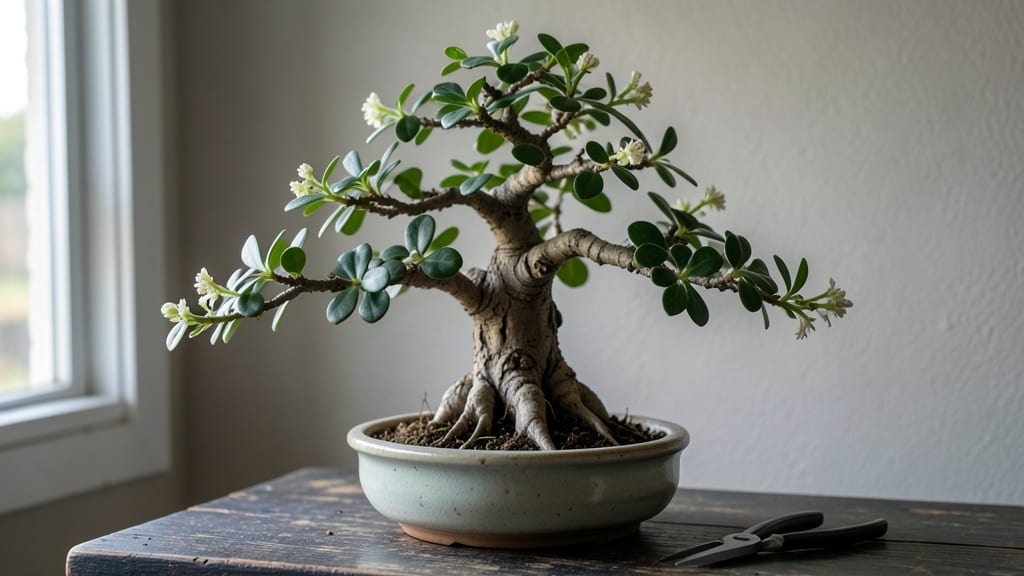
Creating a blooming bonsai tree starts with the right species and a little patience—your reward will be delicate blossoms that transform your home into a living work of art. 🌸 I learned the hard way that forcing a non-flowering variety to bloom is like waiting for a cactus to bear fruit: it’s not going to happen.
Azaleas, cherries, and jasmine are your best bets for consistent blooms, but even they need precise care to open their petals.
Most gardeners overlook the basics: 6-8 hours of sunlight daily, winter dormancy (yes, even indoors), and a fertilization schedule that mimics natural growing seasons. My first bonsai sat in a dim corner for months—no blooms, just frustration—until I moved it to a south-facing window and adjusted my feeding routine.
The difference was immediate: new buds formed within weeks. The key is consistency, not intensity.
You’ll know you’re on the right track when you see tiny flower buds in spring or early summer—tiny as they are, they’re a sign your bonsai is thriving. With proper pruning (just after blooming) and occasional root trimming, you’ll coax years of reliable flowers from a single plant.
The first time I saw my azalea bonsai covered in pink blossoms, I nearly dropped my pruners.
This method works for any flowering bonsai, whether you’re starting from seed or shaping a nursery-grown tree. The secret? Treating it like a miniature outdoor plant, even when it lives indoors. Let’s get those petals popping—year after year.
📚 In This Guide
- What you need
- Instructions
- Tips and common mistakes
- Wrapping up and next steps
What you need
- ● Bonsai Tree: 1 pre-bonsai tree (e.g., Ficus, Azalea, or Japanese Maple) with a blooming variety (e.g., Serissa, Camellia, or Bougainvillea).
- ● Size: 1–3 inches in pot diameter (smaller = easier to style).
- ● Pot: 1 well-draining bonsai pot (ceramic or unglazed clay, 4–6 inches deep).
- ● Drainage holes: Mandatory (3–5 holes for stability + airflow).
- ● Soil: 1 5–10 lbs of akadama, pumice, and lava rock mix (70% akadama, 15% pumice, 15% lava rock).
- ○ Optional: Add 1 tbsp worm castings for nutrients.
- ● Tools: 1 bonsai wire (aluminum or copper, 1–2mm thickness).
- ● 1 pruning shears (sharp, bypass-style for clean cuts).
- ● 1 root hook (for soil aeration).
- ● 1 spray bottle (for misting).
- ● Fertilizer: 1 slow-release bonsai fertilizer (granular or liquid, NPK 5-10-5).
- ● Humidity Tray: 1 pebble tray + water for tropical bloomers.
- ● Support Stakes: 2–3 bamboo stakes for wobbly branches.
- ● Bloom Boosters: 1 phosphorus-rich fertilizer (e.g., fish emulsion) during budding season.
- ● 1 growth regulator (e.g., BA-10) to encourage flowers.
Step-by-Step instructions for cultivating a blooming bonsai tree
Here’s how I’ve coaxed vibrant blooms from my own bonsai—no shortcuts, just steady care.
🌱 Step 1: Select the Right Tree Species for Blooms
Not all bonsai bloom, so choose species like Japanese maple, azalea, or jade plant—they reward patience with flowers. I always start with a healthy nursery-grown specimen (never a cutting) because blooming bonsai need strong root systems to support both foliage and flowers. Examine the trunk for a slight taper—this tells me the tree has natural structural balance.
Size matters too. A 4- to 6-inch pot gives roots room to anchor while keeping the tree manageable. Avoid dwarf varieties; they often lack the energy to bloom. If you’re buying online, check the description for terms like “flowering” or “bloom-capable”—this cuts out guesswork. I’ve learned the hard way that even “bonsai-ready” labels don’t always mean flowering-ready.
☀️ Step 2: Master Light and Seasonal Adjustments
Blooming bonsai need bright, indirect light—think 6-8 hours of morning sun followed by afternoon shade. I place mine near an east-facing window in summer, then rotate the pot quarter-turn weekly so growth stays even. Too much direct sun scorches leaves, and too little light starves the tree of energy for blooms.
Seasonal shifts are critical. In late winter, when buds form, I move the tree to a cool spot (50-60°F) for 6-8 weeks to mimic dormancy. This trick forces the tree to focus energy on flowering instead of foliage. Watch for tiny buds along branches—these are your first sign the tree is responding. If buds drop off, it’s usually a sign of stress from inconsistent light or temperature swings.
💧 Step 3: Water and Feed for Blooming Success
Water when the top inch of soil feels dry—never on a schedule. I use room-temperature water and soak the pot until it drains freely from the bottom. Overwatering suffocates roots, while underwatering causes buds to abort. To check, lift the pot: if it feels heavy, wait a day. If it’s light, water immediately.
Feed with a balanced liquid fertilizer (10-10-10) every 2 weeks during spring and summer, then switch to a high-phosphorus formula (5-10-5) when buds appear in early spring. I halve the dosage in winter—bonsai need rest too. Yellowing leaves? Often a sign of over-fertilizing. Flush the soil with water if this happens, then cut back on feedings for a month.
✂️ Step 4: Prune Strategically to Encourage Flowers
Prune after blooming (late spring) to shape the tree and remove spent flowers. I use sterilized scissors to trim back to the first set of healthy leaves—never more than one-third of the branch at once. This prevents shock and keeps the tree compact. For flowering species, avoid heavy pruning in fall or winter; you’re sacrificing next year’s buds.
Wiring branches into position is optional but helps create the classic bonsai silhouette. If you wire, do it after new growth softens (early summer) and remove wires within 3-4 months to avoid scarring. I’ve seen beginners leave wires too long—this girdles branches and kills them. Always bend, don’t force; the tree should give slightly but not snap.
🪴 Step 5: Repot and Refresh Soil for Long-Term Health
Repot every 2-3 years in early spring, just as buds swell. Use a well-draining bonsai mix (I blend 50% akadama, 30% pumice, and 20% organic matter). Gently tease out 1/3 of the roots to encourage branching—this is called “root pruning.” If roots are circling, trim them with scissors to promote outward growth.
After repotting, place the tree in shade for a week to reduce stress. Water lightly for the first few days, then resume normal care. The first year after repotting, blooms may be sparse—this is normal as the tree recovers. Patience pays off: a well-repotted bonsai can bloom for decades with consistent care. I’ve seen my 20-year-old jade bonsai still producing flowers every spring—proof that slow, steady work wins.
Tips & tricks for perfect blooming bonsai care
Here's what nobody tells you about coaxing flowers from your bonsai—these are the subtle details that make all the difference.
Species Selection Matters: When choosing between Japanese maple, azalea, or jade plant, pay attention to their natural bloom cycles. Japanese maples bloom in spring with stunning foliage, while azaleas offer vibrant spring flowers. Jade plants bloom less predictably but reward patience with delicate white blooms. I always verify the species' flowering history with the nursery—they often know which trees in their stock will bloom reliably.
Light Rotation Strategy: The quarter-turn weekly rotation in Step 2 isn't just about even growth—it's about preventing light stress. I've seen trees develop uneven color because they were always facing the same direction. For indoor bonsai, supplement with a grow light during winter months when natural light is insufficient. Position the light 6-12 inches above the tree for 12-14 hours daily to maintain energy levels for bud formation.
Dormancy Timing: That 6-8 week cool period in late winter is non-negotiable for most flowering species. I've tried cutting it short, and the buds either don't form or fall off prematurely. Create dormancy by moving your bonsai to an unheated garage or basement (50-60°F range). The temperature drop triggers hormonal changes that prepare the tree for flowering. Watch for tiny buds forming—this is your confirmation the dormancy period worked.
Pruning Precision: When trimming back to the first set of healthy leaves in Step 4, use sharp, sterilized scissors to make clean cuts. I've ruined branches by using dull tools that crush stems. For flowering species, avoid cutting into old wood—new growth from current season's branches produces the best flowers. If you're unsure, wait until after the first flush of blooms to prune, as this gives you a visual guide to what's healthy growth.
Pro Tips for Blooming Bonsai Tree
- Here's what nobody tells you about coaxing flowers from your bonsai—these are the subtle details that make all the difference.
- Species Selection Matters: When choosing between Japanese maple, azalea, or jade plant, pay attention to their natural bloom cycles.
- Light Rotation Strategy: The quarter-turn weekly rotation in Step 2 isn't just about even growth—it's about preventing light stress.
Frequently asked questions
Got questions about nurturing a blooming bonsai tree? You’re not alone! Here are some of the most common queries—plus expert-backed answers to help you keep your tree thriving.
How long does it take for a bonsai tree to bloom?
A bonsai’s blooming timeline depends on its species and age. Most deciduous varieties (like Japanese maple or azalea) take 3–5 years to produce flowers, while evergreens (e.g., juniper or pine) may never bloom naturally. Patience is key—focus on proper pruning and seasonal care to encourage healthy growth first!
Can I force a bonsai to bloom out of season?
Forcing blooms is tricky but possible with light manipulation and temperature control. Place your tree under 12–14 hours of grow lights during winter, then mimic spring by gradually increasing warmth (60–70°F). Warning: Overdoing this can stress the tree—best for experienced growers or seasonal bloomers like azalea.
What should I do if my bonsai’s buds drop before blooming?
Bud drop usually signals stress from temperature swings, drafts, or overwatering. Check these fixes:
- Move to a stable, bright spot (avoid direct sun or cold drafts).
- Water only when the top 1 inch of soil is dry—never soggy!
- Fertilize lightly with a balanced bloom booster (e.g., 10-10-10) during budding season.
Are there easy-to-bloom bonsai trees for beginners?
Start with these low-maintenance bloomers:
Tree
Bloom Season
Care Notes
Japanese Maple (Acer palmatum)
Spring (red/pink flowers)
Prefers partial shade; prune after blooming.
Azalea (Rhododendron)
Spring (vibrant clusters)
Acidic soil (pH 4.5–5.5); avoid hard water.
Ficus (Ficus retusa)
Rare (but possible with patience!)
Hardy and forgiving—great for mistakes.
Why are my bonsai flowers small or sparse?
Small/sparse blooms often stem from nutrient deficiencies or over-pruning. Try this:
- Switch to a high-phosphorus fertilizer (e.g., 5-10-5) during blooming season.
- Leave at least 3–5 leaf sets per branch to support flower production.
- Check for pests (e.g., spider mites)—they sap energy from buds.
Wrapping up and next steps
Witnessing your blooming bonsai tree burst into vibrant life is a reward worth every moment of patience and care! 🌸 From selecting the right species to mastering pruning, watering, and seasonal adjustments, each step brings you closer to that breathtaking display of color and tranquility.
Remember, bonsai is a journey—celebrate small victories, like new buds or lush foliage, and trust the process.
Ready to take the next step? Start small—whether it’s experimenting with a new pruning technique, adjusting your watering schedule, or even sharing your progress with fellow bonsai enthusiasts. Your garden (and your tree!) will thank you. Happy growing! 🌱