
Blooming
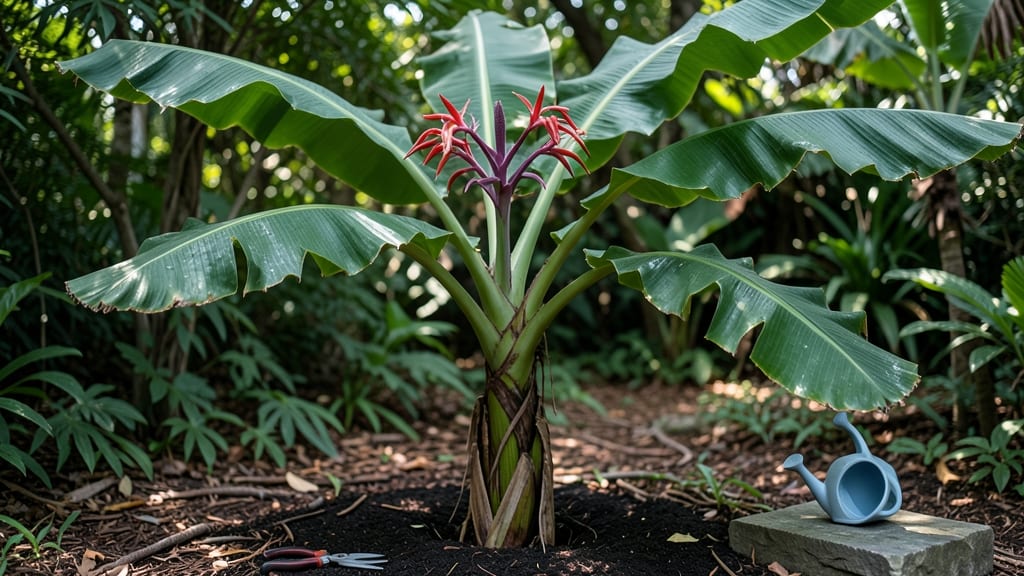
That moment when your banana plant unfurls its dramatic purple-and-gold flower spike—it’s the first sign your tropical tree is about to reward you with fruit. 🌺 I’ll never forget the first time mine bloomed after two years of patient care: that rush of excitement mixed with nerves, wondering if I’d finally see those sweet, creamy bananas grow.
The bloom isn’t just pretty; it’s a promise of harvest, and understanding it means you’ll know exactly how to support your plant through this critical stage.
Recognizing the bloom is easier than you think—it starts as a tight bud at the top of the pseudostem, then splits open to reveal a striking arching flower stalk covered in tiny, vibrant blooms.
Here’s the catch: not every banana plant blooms, and even when they do, fruit production depends on factors like maturity (most varieties need 18-24 months to bloom), climate (they thrive in USDA zones 10-11 but can be grown in containers in cooler areas), and consistent care.
The good news? With the right watering, fertilization, and pest control, you can give your plant the best shot at success.
Once that flower spike appears, your focus shifts to protecting it—banana blooms are delicate and vulnerable to wind, pests, and even curious wildlife. I learned the hard way that covering new blooms with lightweight netting saves them from hungry birds and beetles.
Keep the soil moist but not soggy (banana plants hate wet feet), and feed with a balanced fertilizer every 4-6 weeks to fuel fruit development. Within weeks, you’ll see tiny bunches forming, and before you know it, you’re holding homegrown bananas—sweeter and more satisfying than any store-bought bunch.
Here’s the secret most gardeners miss: after fruiting, your banana plant will die back, but not before sending out pups (offspring) at its base. These are your future banana trees—simply dig them up and replant them to keep the cycle going.
Whether you’re growing in a tropical climate or a sunny patio, this process is your ticket to a never-ending supply of bananas. Let’s get those blooms thriving!
📚 In This Guide
- What you need
- Instructions
- Tips and common mistakes
- Wrapping up and next steps
What you need
- ● Banana plant (Musa spp.) – A healthy, mature plant (at least 9–12 months old) with a sturdy pseudostem.
- ● Well-draining soil – A mix of 60% peat or coconut coir, 20% perlite, and 20% compost (pH 5.5–7.0).
- ● Balanced fertilizer (10-10-10 or 20-20-20) – 1 tablespoon per gallon of water, applied every 4–6 weeks during growing season.
- ● Watering can or hose with a gentle spray nozzle – Banana plants love moisture but hate soggy roots!
- ● Pruning shears or sharp knife – For trimming dead leaves or excess growth.
- ● Mulch (straw, wood chips, or pine bark) – 2–3 inches thick to retain moisture and regulate soil temp.
- ○ Support stake or trellis (optional but helpful) – A 6–8 ft tall bamboo stake or metal trellis to guide heavy bunches.
- ● Potassium-rich fertilizer (e.g., banana plant food) – Boosts bloom and fruit development.
- ● Epsom salt (magnesium sulfate) – 1 tablespoon per gallon of water monthly for lush foliage.
- ● Humidity tray or pebble tray – Mimics tropical conditions if you’re in a dry climate.
- ● Handheld fan or oscillating fan – Encourages cross-pollination (if growing multiple plants).
- ● Garden gloves – Protects your hands from sap and rough leaves!
How to identify and care for a banana plant bloom
Here's how to spot that first bloom—and what it means for your tropical plant's fruit potential.
🌱 Step 1: Recognize the Bloom Structure
The banana plant bloom emerges from the heart of the plant as a tight, purple or red flower cluster (called an inflorescence) that grows upward. Unlike leaves, this structure looks dense and compact, with no individual petals visible at first. I always check the center of the plant after new growth appears—it's easy to mistake early blooms for damaged leaves.
Watch for the purple or maroon coloration that develops as the bloom matures. This isn't just any leaf—it's the plant's way of signaling it's ready to produce fruit. The bloom grows from the pseudostem (the false trunk) and unfurls upward over 2-4 weeks, revealing small, tubular flowers that will eventually become bananas.
☀️ Step 2: Provide Ideal Conditions for Blooming
Once you spot the bloom, move your banana plant to a location with full sun (6+ hours daily) and warm temperatures (75-85°F). Banana plants need these conditions to support fruit development. I've found that even a slight drop below 65°F can cause the bloom to wither before fruiting begins.
Increase watering slightly during this phase—banana plants need 1-2 inches of water weekly when blooming. Let the top 2-3 inches of soil dry slightly between waterings to prevent root rot, but don't let it get bone-dry. You'll notice the leaves around the bloom become slightly droopy if it's thirsty.
🌿 Step 3: Support the Plant During Fruit Development
After the bloom unfurls, small green banana hands (clusters of bananas) will begin forming. This is when your plant needs extra care. I stake my banana plants with bamboo or wooden supports to prevent the heavy fruit from snapping the stem. The hands grow downward, so the weight pulls the plant toward the ground.
Fertilize with a balanced, water-soluble fertilizer (10-10-10) every 4-6 weeks during fruiting. You'll see the banana hands grow longer and heavier over 3-6 months, depending on the variety. Keep the soil consistently moist but well-drained—bananas need steady hydration but hate soggy roots.
⏰ Step 4: Monitor for Pests and Diseases
Banana blooms attract pests like aphids, spider mites, and banana weevils. Inspect the undersides of leaves and the bloom itself weekly. I spray neem oil on the bloom and surrounding leaves as a preventive measure—it's organic and effective against soft-bodied pests. Remove any yellowing or spotted leaves immediately to prevent spread.
Watch for signs of panama disease (Fusarium wilt), which causes wilting and black streaks on the pseudostem. If you notice these symptoms, isolate the plant and remove it from the garden to prevent contamination. Healthy blooms should remain firm and upright, with no unusual discoloration.
🍌 Step 5: Harvest Bananas at the Right Time
Bananas ripen from the bottom hand upward. Harvest when the bottom bananas turn slightly yellow (usually 9-12 months after blooming). Gently twist the banana hand to detach it from the plant—don't cut it, as this can damage the stem. I let the bananas ripen indoors in a paper bag with an apple for a few days to speed up the process.
After harvesting, the mother plant will die back, but don't worry—new pups (offsets) will grow from the base. These can be transplanted to continue your banana harvest. The cycle starts all over again, and you'll have another chance to watch for that exciting first bloom!
Tips & tricks for identifying and caring for banana plant blooms
Here's what I've learned after watching my own banana plants go from blooms to fruit—these little details make all the difference.
Bloom Identification: The key difference between a bloom and damaged leaves is the density—blooms are compact with no visible petals at first. Run your fingers gently over the center: a bloom feels firm and slightly waxy, while damaged leaves will have ragged edges. I've caught blooms early by checking the plant's center every 3-4 days as new growth appears.
Temperature Matters: Those 75-85°F temperatures aren't just ideal—they're critical. If your thermometer dips below 65°F for more than a few hours, the bloom can abort fruiting. I've seen this happen in cooler climates—move potted plants indoors or use row covers during cold snaps. Even a slight drop can cause the bloom to wither before bananas form.
Support System: Don't skip the staking! The weight of banana hands can pull the entire plant over. I use bamboo stakes tied with soft plant ties**—they're flexible enough to sway with the wind but strong enough to support 20+ pounds of fruit. Position stakes on the opposite side of where the hands grow downward.
Harvest Timing: The 9-12 month window is a guideline—watch the bottom bananas instead of the calendar. When they turn a pale yellow with slight brown speckling, that's your cue. I've learned to harvest at this stage because bananas continue ripening after picking, and they'll be sweeter indoors with the apple trick.
Pro Tips for Banana Plant Bloom
- Here's what I've learned after watching my own banana plants go from blooms to fruit—these little details make all the difference.
- Bloom Identification: The key difference between a bloom and damaged leaves is the density—blooms are compact with no visible petals at first.
- Temperature Matters: Those 75-85°F temperatures aren't just ideal—they're critical.
Frequently asked questions
Got questions about your banana plant’s bloom? You’re not alone! Here are answers to the most common queries to help you navigate this exciting phase with confidence.
How do I know if my banana plant is ready to bloom?
A banana plant is ready to bloom when it reaches maturity (usually 9–18 months old) and develops a pseudostem that’s 6–12 feet tall. Look for a tight, spiky bud (the heart) emerging from the center—this is the inflorescence (flower cluster) forming. If your plant has broad, healthy leaves and a sturdy stem, it’s likely ready!
How long does it take for a banana bloom to turn into fruit?
After the bloom appears, it takes about 2–3 months for bananas to develop. The inflorescence will unfurl, revealing tiny flowers that eventually turn into hands of bananas. Patience is key—healthy plants in warm climates (60–90°F) produce fruit fastest. Pro tip: Monitor humidity; dry air can slow ripening.
What does it mean if my banana plant blooms but no fruit forms?
Several factors can cause this, including lack of pollination (wind or insects are usually needed), nutrient deficiencies (add potassium-rich fertilizer), or stress (overwatering/drought). If the bloom dries up without fruit, check for pests (like banana aphids) or environmental shocks. Try this: Gently shake the bloom to encourage pollination or hand-pollinate with a soft brush.
Can I eat bananas from the same plant that bloomed?
Yes! The plant that blooms will produce fruit, but here’s the catch: It dies afterward (banana plants are monocarpic). Save seeds (if you want to grow more plants) or propagate from suckers (offspring shoots) at the base. The good news? Each sucker can grow into a new fruiting plant in 1–2 years!
What other plants bloom like bananas?
If you love tropical blooms, check out these similar plants:
- Plantain (close relative to bananas, edible but starchier)
- Heliconia (vibrant, bird-attracting flowers)
- Bird of Paradise (dramatic orange/blue blooms)
- Canna Lily (edible rhizomes + striking flowers)
Most thrive in USDA Zones 9–11 or as houseplants in cooler climates.
Wrapping up and next steps
Watching your banana plant bloom is an exciting milestone—it’s nature’s way of saying, “Get ready for a harvest!” 🌱✨ Whether you’re a seasoned grower or a curious beginner, recognizing the bract and understanding its care needs puts you on the fast track to sweet, homegrown bananas.
Now that you’re armed with the know-how, why not take the next step? Monitor your plant’s health, protect those blooms from pests, and soon, you’ll be peeling your own tropical treats! Happy growing!