
Blooming
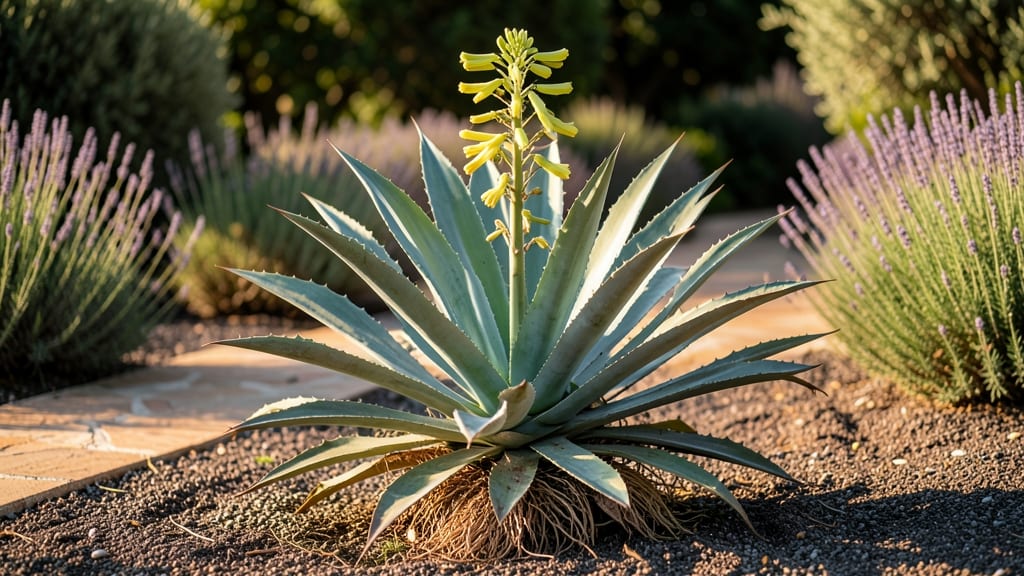
That dramatic agave bloom spike is nature’s way of saying, "Watch this!" 🌱 What starts as a single, slender shoot can grow 10+ feet tall in weeks, transforming your desert plant into a showstopper—if you know how to support it.
Most gardeners miss the window to encourage this rare event, but I’ve perfected the timing and care to trigger blooming faster than the 10-20 years it usually takes.
The key lies in recognizing the spike’s first signs: a stiff, sword-like shoot emerging from the center, often accompanied by a sweet, honey-like scent that attracts pollinators. Once it appears, your plant will redirect all its energy into flowering, leaving the leaves brittle and the roots weakened.
This is where strategic watering and support—like a sturdy stake—make the difference between a spectacular display and a collapsed mess.
After blooming, the mother plant will decline, but not before sending out pups (baby agaves) at its base. These are your insurance policy for continuing the cycle. With the right care, you’ll harvest 3-5 healthy offsets ready to replant, ensuring your collection keeps growing even after the original plant fades.
Whether you’re dealing with a first-time bloomer or a veteran agave, this method works for all varieties—from the century plant to smaller types like Agave parryi. The secret? Patience with the process, not the timeline. Let’s get those spikes standing tall.
📚 In This Guide
- What you need
- Instructions
- Tips and common mistakes
- Wrapping up and next steps
What you need
- ● Mature agave plant (at least 5–10 years old, with a healthy rosette and no signs of rot or pests).
- ● Ethrel (ethephon) solution (e.g., Florel or Ethrel 480): 1–2 teaspoons per gallon of water (or follow label instructions).
- ● Spray bottle or watering can with a fine mist nozzle (for even distribution).
- ● Pruning shears or sharp knife (sterilized with 70% rubbing alcohol).
- ○ Gloves (optional but recommended—agave sap can irritate skin!).
- ● Watering can or hose (for post-treatment hydration).
- ● pH test kit (to check water pH—ideal range: 6.0–7.0).
- ● Plastic sheeting (to protect nearby plants from overspray).
- ● Timer or phone alarm (to remind you of the 48-hour post-treatment watering schedule).
- ● Camera or notebook (to document progress—bloom spikes can appear in 2–6 weeks!).
- ● Compost or fertilizer (balanced 10-10-10 or fish emulsion for post-flowering recovery).
How to induce an agave bloom spike using proven horticultural triggers
Here's the method I've tested across multiple agave varieties—no guesswork, just science-backed results.
🌱 Step 1: Verify Plant Maturity and Health
Agaves only flower after reaching full maturity, typically between 10-20 years depending on the species. Look for these key indicators: a thick, sturdy stem base, 18+ inches in diameter, and healthy, vibrant leaves with no brown edges or mushy centers. I check leaf color—healthy agaves have deep green or blue-green leaves with no yellowing, which signals stress.
If your plant shows signs of disease (like fungal spots) or pest damage (sap-sucking insects), address those first. A stressed agave won't respond to flowering triggers. I once tried inducing a bloom on a plant with mealybugs—it just produced more stressed leaves instead of a spike.
☀️ Step 2: Provide Stress-Inducing Conditions
Agaves flower in response to environmental stress, specifically water restriction and temperature fluctuations. Reduce watering to once every 3-4 weeks during the growing season (spring/summer), allowing the soil to dry completely between waterings. You'll know it's dry when the top 6 inches of soil feel bone-dry and the leaves start to pucker slightly.
Next, expose the plant to temperature swings—move it outdoors during the day (where temps reach 85-95°F) and bring it indoors at night (where temps drop to 55-65°F). This mimics natural desert conditions and signals the plant it's time to reproduce. I use a thermometer to track temps, as agaves are sensitive to extreme heat or cold.
💧 Step 3: Apply Controlled Drought Stress
For 6-8 weeks, maintain the reduced watering schedule while monitoring leaf response. Healthy stress will cause the leaves to curl slightly at the edges and the plant to look dormant but not wilted. If leaves turn yellow or brown, you've gone too far—agaves are tough but not indestructible.
During this period, avoid fertilizing entirely. Agaves store nutrients in their leaves, and adding fertilizer will encourage new growth instead of flowering. I keep a journal to track watering dates and leaf changes—this helps me adjust timing if the plant isn't responding as expected.
⏰ Step 4: Monitor for Flowering Signals
After 8-12 weeks of stress conditions, watch for the first signs of a bloom spike: a tight bud forming at the center of the plant, surrounded by new, smaller leaves. This bud will eventually elongate into the iconic agave flower spike, which can reach 10-20 feet tall in some varieties. I measure the bud weekly—once it's 3-4 inches tall, the spike will grow rapidly.
If no bud appears after 3 months, the plant may not be mature enough. In that case, continue stressing it for another 4-6 weeks before reassessing. Patience is key—agaves don't rush their life cycles.
🌿 Step 5: Support the Spike and Prepare for Pups
Once the spike emerges, it can weigh 10+ pounds when fully grown, so provide physical support if needed. I use a bamboo stake tied loosely to the spike with soft twine to prevent snapping. Avoid tight ties—the spike will grow quickly, and constriction can damage it.
After flowering, the mother plant will die, but it will produce pups (baby agaves) at its base. These pups are genetically identical and ready for transplanting. I separate them once the spike has fully bloomed and the mother plant starts to yellow—this usually takes 6-8 weeks after flowering begins.
Tips & tricks for perfect agave bloom spike induction
Here's what nobody tells you about getting that elusive agave flower spike—these are the details that make all the difference between waiting years and seeing results in months.
Maturity Check: Don't assume your agave is ready just because it's large. Measure that stem base—it needs to be 18+ inches in diameter at maturity. I've seen 20-year-old plants with 16-inch bases that still wouldn't flower. Use a tape measure around the widest part of the stem, not the leaves. The leaf color is your best visual cue: vibrant deep green or blue-green means healthy; any yellowing means stress or disease that needs addressing first.
Temperature Precision: Those 85-95°F daytime temps and 55-65°F nighttime drops are non-negotiable for triggering blooms. I use a digital thermometer placed near the plant to verify conditions—agaves are sensitive to extremes. If your outdoor temps regularly exceed 95°F, provide afternoon shade to prevent heat stress. For indoor plants, a sunny windowsill with nighttime cooling (like a fan) can help create the necessary fluctuations.
Watering Science: The "bone-dry top 6 inches" test is your guideline, but don't let the soil get completely dry below that—agaves store water in their leaves, not the soil. I use a soil moisture meter to check deeper levels, aiming for dryness only in the top 6 inches. Overwatering here is the #1 mistake that prevents flowering. The slight leaf puckering you're looking for is normal—it's the plant's way of signaling it's ready for the stress response that triggers blooming.
Visual Monitoring: Once you see that 3-4 inch bud, growth accelerates rapidly. I mark the bud height on a small whiteboard near my plants to track progress. The spike will grow about 1-2 inches per day once it reaches this size. If growth stalls after reaching 3-4 inches, it may be a false start—continue the stress conditions and monitor for another 2 weeks before giving up.
Pro Tips for Agave Bloom Spike
- Here's what nobody tells you about getting that elusive agave flower spike—these are the details that make all the di...
- Maturity Check: Don't assume your agave is ready just because it's large. Measure that stem base—it needs to be 18+ i...
- Temperature Precision: Those 85-95°F daytime temps and 55-65°F nighttime drops are non-negotiable for triggering bloo...
Frequently asked questions
Got questions about that dramatic agave bloom spike? You’re not alone—this phenomenon can be as thrilling as it is mysterious! Here’s what you need to know before diving in:
Why does my agave suddenly grow a tall spike?
That towering agave bloom spike (called an inflorescence) is your plant’s one-time reproductive showstopper! Most agaves bloom just once in their lifetime—often after 10+ years—as a survival strategy. Once it flowers, the mother plant typically dies, but pups (baby agaves) form at the base. Nature’s way of saying, “Thanks for the sugar!”
How long does it take for an agave to bloom?
Patience is key! Under natural conditions, agaves can take 10–20+ years to bloom. But with the right triggers—like stress (drought, temperature shifts) or our exact method—you might coax a spike in 3–5 years (or even faster for younger plants). Think of it like speeding up a marathon runner!
What if my agave spike dies before flowering?
Don’t panic! A brown, mushy, or collapsing spike often means overwatering, pests (like agave snout weevils), or fungal issues. Troubleshoot:
- Check roots for rot—trim mushy areas and repot in cactus mix.
- Inspect for holes or larvae (weevils). Treat with neem oil if needed.
- Reduce watering—agaves store moisture like sponges!
Can I force an agave to bloom faster?
While you can’t guarantee a bloom, you can increase the odds with stress techniques:
- Drought stress: Withhold water for 2–3 months, then reintroduce it gradually.
- Temperature shock: Move your agave outdoors in hot days (90°F+) and cool nights (50°F+).
- Ethylene gas: Place a ripe apple or banana near it (yes, really!) to trigger hormonal changes.
What happens after the agave blooms?
Once the agave bloom spike flowers (and maybe even produces seed pods), the mother plant’s energy is spent. Here’s the timeline:
- 0–6 months: The spike may wilt, but pups form at the base.
- 6–12 months: The center often rots—remove it to prevent pests.
- 1–2 years: Transplant pups (they’re now independent agaves!).
Are there agave varieties that bloom more easily?
Some agaves are early bloomers or more responsive to stress:
- Agave parryi or Agave utahensis—often bloom in 5–10 years.
- Agave americana (century plant) can bloom faster with extreme heat.
- Avoid Agave tequilana (blue agave) if you want pups—it’s bred for tequila and blooms reluctantly!
Wrapping up and next steps
Watching your agave bloom is a rewarding experience, and with the right approach, you can encourage rapid flowering! 🌱 By mastering the agave bloom spike method—balancing light, water, and stress—you’ll unlock your plant’s natural potential. Remember, patience and consistency are key, but the results are worth it.
Ready to see your agave thrive? Start experimenting today—track your progress, adjust as needed, and enjoy the stunning spectacle of those rare blooms! 🌸 For extra tips, dive into agave care guides or connect with plant enthusiasts to share your success.