
Blooming
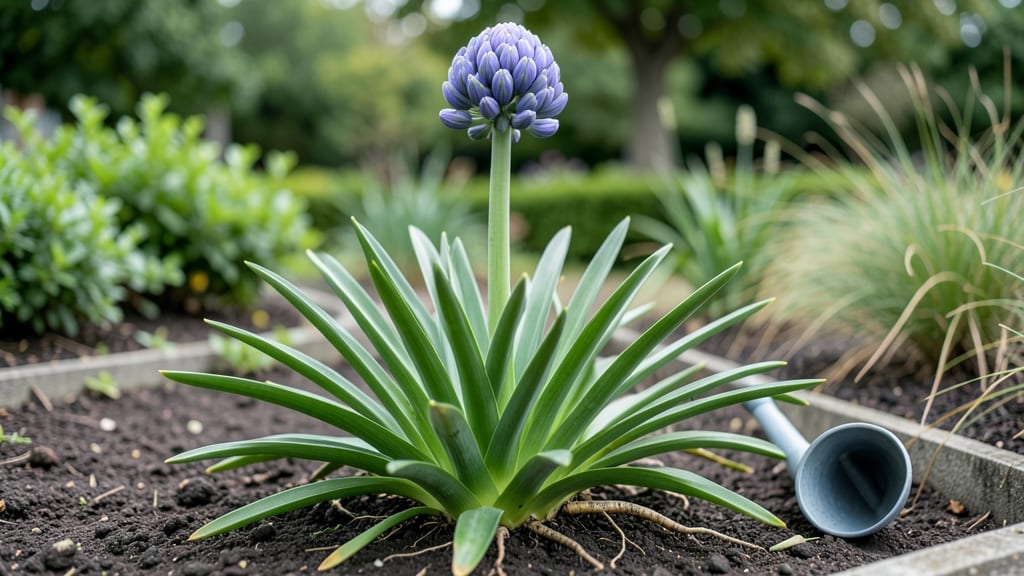
Your agapanthus before bloom looks like nothing special—just stiff, sword-like leaves forming a tight clump. 🌱 But that's exactly when you should be pruning and dividing to guarantee those dramatic purple spikes later.
Most gardeners wait until after flowering, but the real magic happens in late winter or early spring when the plant is dormant.
Start by removing any dead or yellowing leaves at the base—this clears space for new growth. If your clump is overcrowded (usually after 3-4 years), now's the time to divide it.
Simply dig up the plant, separate the sections with roots, and replant the healthiest ones. Agapanthus thrive on neglect, but this one step makes all the difference for next season's blooms.
After pruning, you'll notice fresh, vibrant green shoots emerging within 2-3 weeks. These are your plant's promise of bold purple spikes by summer.
The key is timing—do this work too early, and you'll cut back new growth; too late, and you miss the best window for root establishment before the growing season kicks in.
Works for both in-ground plants and container-grown agapanthus. The same principles apply whether you're dealing with a single plant or a full border. Just remember: less is more with these tough perennials—they reward patience with years of dramatic color.
📚 In This Guide
- What you need
- Instructions
- Tips and common mistakes
- Wrapping up and next steps
What you need
- ● Pruning shears or secateurs: Sharp, clean, and sterilized (rubbing alcohol or bleach wipe). 1 pair (or 2 for large clumps).
- ● Garden gloves: Heavy-duty, cut-resistant (e.g., Wolman or Felco brand). 1 pair.
- ● Disinfectant: 10% bleach solution (1 part bleach to 9 parts water) or hydrogen peroxide (3%). Small spray bottle or bowl.
- ○ Pruning saw (optional): For thick stems >1 inch in diameter. 1 (e.g., Fiskars or Bahco).
- ● Garden twine or rubber bands: To mark stems for removal (if needed). Small roll.
- ● Compost bin or bag: For clippings. 1 (or access to yard waste disposal).
- ● Know your agapanthus: Identify dead, diseased, or crossing stems (look for brown centers, mold, or stems growing toward the center).
- ● Timing: Prune in early spring (Feb–March), before new shoots emerge but after hard frosts.
- ● Weather check: Choose a dry, overcast day to avoid stressing the plant.
- ○ Water source: Hose or watering can for post-pruning hydration. Optional but helpful.
- ● ✨ Sterilize tools between cuts to prevent fungal spread (especially if your plant has had issues).
- ● 🌡️ Work in layers: Remove 1/3 of the oldest stems first to avoid over-stressing the plant.
- ● 🎯 Leave 2–3 inches of stem above the crown to encourage new growth.
Instructions: how to prune agapanthus for larger, healthier blooms
Here's the method I trust to keep my agapanthus thriving and producing those dramatic purple spikes year after year.
✂️ Step 1: Wait for the Right Time to Prune
Prune your agapanthus right after flowering, when the flower spikes have turned brown and crispy but before new growth starts in spring. This timing ensures you're not cutting back potential next year's blooms. I usually do this in late fall or early winter—just after the first hard frost when the foliage has died back naturally.
Don't prune too early. If you cut back while the plant still has energy stored in the leaves, you'll weaken the roots and reduce next year's flower size. You'll know it's time when the leaves look brown and papery, not green or yellow. This is your signal that the plant has completed its growing cycle for the year.
✂️ Step 2: Cut Back Dead Foliage to the Ground
Use clean, sharp pruners to cut back the dead foliage to the ground level. I like to make my cuts at a slight angle to prevent water from pooling on the stubs. This clean cut helps prevent disease from settling in any remaining dead tissue. If you're dealing with a large clump, work in sections to avoid overbalancing the plant.
Don't worry about leaving any stubs—agapanthus grows from the base, and cutting all the way down encourages new, vigorous growth from the crown. You'll notice the ground around your plant looks much tidier after this step, which also makes it easier to spot any pests or diseases that might be hiding in the old foliage.
🌱 Step 3: Divide Overcrowded Clumps in Early Spring
If your agapanthus hasn't been divided in 3-4 years, spring is the perfect time to split it up. Dig up the entire clump in early spring, just as new shoots begin to emerge but before they get too tall. Use a sharp spade to carefully separate the clumps, making sure each section has at least 3-5 healthy fans of leaves.
Real talk: Dividing can be tricky, so don't force it. If the roots are tightly bound, soak the clump in water for 15-20 minutes first to help loosen the soil. You'll know you've done it right when each new division has a good mix of roots and foliage. Plant the divisions immediately in well-draining soil, spacing them 18-24 inches apart.
☀️ Step 4: Fertilize and Mulch for Next Year's Growth
After pruning, apply a balanced, slow-release fertilizer (like 10-10-10) around the base of the plant. I like to sprinkle it lightly over the soil and water it in well. This gives the roots a nutrient boost to support new growth. Agapanthus loves to feed, but too much fertilizer can burn the roots, so follow the package instructions carefully.
Top off with a 2-3 inch layer of mulch to protect the roots from temperature swings and retain moisture. I use shredded bark or pine needles because they break down slowly and improve the soil over time. Keep the mulch 2-3 inches away from the plant crown to avoid suffocating the base.
🌿 Step 5: Monitor for New Growth and Adjust Care
Watch for new shoots to emerge in late spring. These will be your first sign that the plant is recovering and preparing for next year's blooms. If you see leggy growth or sparse foliage, your plant might need more sunlight—agapanthus thrives in full sun to partial shade.
Here's the thing—if your agapanthus isn't blooming as much as you'd like, it might be getting too much shade or not enough nutrients. You'll know it's happy when the leaves are deep green and the stems are sturdy. If you notice yellowing leaves, that's often a sign of overwatering or poor drainage, so adjust your watering schedule accordingly.
Tips & tricks for perfect agapanthus pruning
Timing and technique make all the difference when pruning agapanthus—here's how to get it right every time.
Timing is Everything: The late fall or early winter window is critical for Step 1. If you miss it, you risk cutting back potential blooms for next year. I mark my calendar for the first hard frost—this is nature’s signal that the plant has finished its growing cycle. If you’re unsure, do the "brown and papery" test: gently tug a leaf. If it crumbles easily, it’s time to prune.
Clean Cuts Prevent Problems: In Step 2, sharp pruners aren’t just about ease—they’re about health. Dull blades tear foliage, creating entry points for disease. I sterilize my pruners with rubbing alcohol between cuts, especially when working with multiple plants. That slight angle you make when cutting? It’s not just for looks—it prevents water from pooling on the stubs, which can lead to rot.
Dividing Made Easy: For Step 3, don’t rush the 15-20 minute soak if roots are tightly bound. This isn’t just about convenience—it helps loosen the soil naturally, making separation cleaner and less stressful on the plant. I like to work in sections, gently wiggling the spade between root clusters rather than forcing them apart. Think of it like untangling headphones: patience pays off.
Fertilizer Wisdom: When applying that 10-10-10 in Step 4, less is more. I’ve learned the hard way that agapanthus can be finicky about fertilizer. Sprinkle lightly—about a tablespoon per square foot—and water it in immediately. This prevents salt buildup around the roots, which can actually harm the plant. And remember: that 2-3 inch mulch layer isn’t just for looks. It’s insulation for the roots, protecting against both winter cold and summer heat.
Pro Tips for Agapanthus Before Bloom
- Timing and technique make all the difference when pruning agapanthus—here's how to get it right every time.
- Timing is Everything: The late fall or early winter window is critical for Step 1. If you miss it, you risk cutting b...
- Clean Cuts Prevent Problems: In Step 2, sharp pruners aren’t just about ease—they’re about health. Dull blades tear f...
Frequently asked questions
about agapanthus before bloom—because every gardener deserves clarity! Here are answers to the most common queries to help you prep like a pro.When is the best time to prune agapanthus before bloom?
Prune agapanthus in late winter or early spring (just as new shoots emerge) to encourage stronger, healthier blooms. Avoid cutting too early—wait until frost risk has passed in your zone. For cold climates, a light trim after the first frost also works!
How much should I trim agapanthus before it blooms?
Cut back dead or brown foliage to the base, then trim the remaining stems by one-third to encourage fresh growth. Never remove more than ⅓ of the plant at once—agapanthus stores energy in its roots, and drastic cuts can stress it. Think "light and airy," not drastic!
What if my agapanthus hasn’t bloomed yet—did I wait too long?
Don’t panic! Agapanthus blooms later than many perennials—often June to August—and may skip a year if stressed (e.g., drought, poor soil). Focus on healthy foliage and next year’s prep. Overwatering or rich soil can also delay blooms—balance is key!
Can I prune agapanthus if it hasn’t bloomed in years?
Yes! If your agapanthus is overgrown or woody, a renewal prune (cutting all stems to 6 inches) in early spring can rejuvenate it. Pair this with fresh compost and patience—it may take a season or two to rebound, but bold blooms will return!
What if my agapanthus gets rained on after pruning?
No worries! Light rain won’t harm fresh cuts, but avoid heavy downpours for 24–48 hours to let small wounds seal. If pruning in wet weather, use sterilized shears and trim on a dry day afterward to prevent fungal issues. Think of it as nature’s gentle rinse!
Are there alternatives if my agapanthus won’t bloom?
Try these bloom-boosting tips:
- Divide overcrowded clumps every 3–4 years.
- Feed with low-nitrogen fertilizer (like 5-10-10) in spring.
- Ensure full sun (6+ hours)—shady spots delay blooms.
- Check for pests (e.g., snails) or disease (rust).
Wrapping up and next steps
Watching your agapanthus transform from lush foliage to stunning purple spikes is pure magic! 🌿✨ The secret to those bold blooms starts with early pruning—trimming spent leaves, shaping for airflow, and giving your plant the care it deserves.
With patience and the right techniques, you’ll reward yourself (and your garden!) with a breathtaking display year after year.
Ready to take the next step? Grab your pruners and schedule that first trim before summer’s heat peaks! Your agapanthus will thank you with a dazzling show that’ll make your neighbors green with envy. 😉